



McLaren Vale, New Zealand Wines, Wine and Food, Wine regions, Wine types, Wines from Australia, Wines from Canada
From France to the New World: the fascination of Bordeaux blends

Jan
1. Introduction
Focus on international Bordeaux blends from overseas
While France continues to be considered the home of this style of wine, overseas wine countries such as the USA, New Zealand, Chile, Australia, Canada and South Africa have developed their own interpretations. These regions offer unique climatic and soil conditions that give the wines their individual character.
- New Zealand produces Bordeaux blends that are known for their freshness and elegance. The Hawke’s Bay and Waiheke Island regions in particular have made a name for themselves.
- Chile impresses with powerful and structured wines, especially from the Maipo Valley and the Colchagua Valley.
- Australia, especially in regions such as Margaret River or McLaren Vale, produces opulent and multi-layered Bordeaux blends that often impress with a hint of eucalyptus and cassis.
- Canada offers Bordeaux blends with precision and elegance, particularly from the Okanagan Valley and the Niagara Peninsula.
- South Africa focuses on spicy and deep blends that are characterized by the climate of the Cape region.
- The USA, particularly in California (Napa Valley), has also established world-class Bordeaux blends, often under the term “Meritage”.
These international Bordeaux blends offer an exciting variety for wine lovers and allow them to experience the essence of the Bordeaux style in completely new ways. They are a true journey of discovery through the world of wine – and each blend tells the story of its origin and terroir.
2. What are Bordeaux blends?
Definition and history
A Bordeaux blend is a blend based on the traditional grape varieties cultivated in the famous French wine region of Bordeaux. The concept of this assemblage has its origins in Bordeaux, where winegrowers have been combining different grape varieties for centuries to create a harmonious, complex and balanced wine. The aim is to combine the individual strengths of each grape variety while at the same time balancing out possible weaknesses. This principle of blending has made Bordeaux blends one of the most prestigious wine styles in the world.
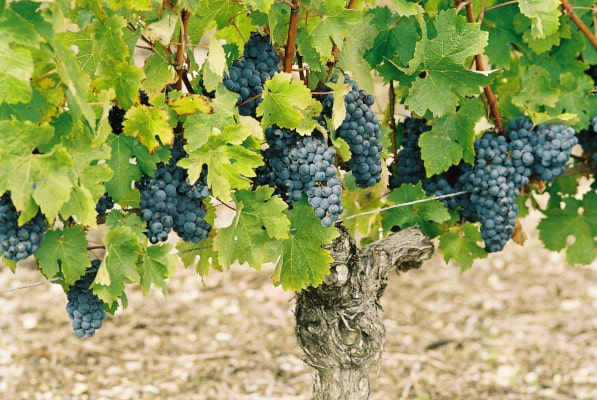
The classic grape varieties for Bordeaux blends
- Cabernet Sauvignon: Known for its strong tannin structure, intense dark fruit (such as blackcurrant and cherry) and longevity. This grape variety gives Bordeaux blends backbone and structure.
- Merlot: This charming grape variety brings soft, fruity aromas such as plum and red berries as well as a silky texture. It provides accessibility and balances out the strong tannins of the Cabernet Sauvignon.
- Cabernet Franc: This grape variety often adds floral and spicy notes such as violets and green peppers. It can also increase the complexity and elegance of a blend.
- Petit Verdot: Used in small quantities to add color, depth and additional tannins. Petit Verdot often contributes nuances of violets and dark berries.
- Malbec: Formerly more common in Bordeaux, now used in smaller quantities. Malbec brings richness, fruit intensity and soft tannins to the blend.
Origin: Bordeaux, France
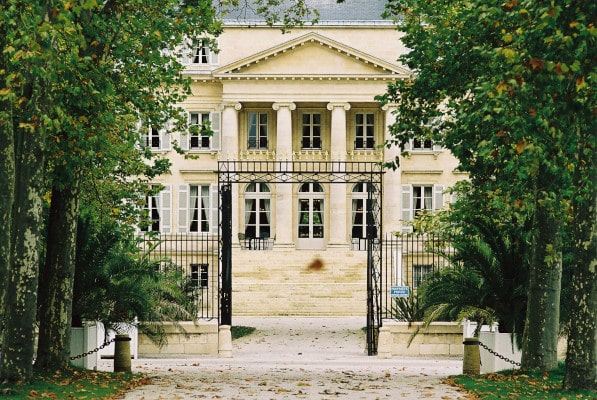
The Bordeaux wine region, which stretches along the Garonne, Dordogne and Gironde rivers in the southwest of France, is the epicenter of Bordeaux blends. The region is divided into two main areas: the left bank (Rive Gauche) and the right bank (Rive Droite). Each of these sides has its own climatic and geological conditions, which influence the style of the wines.

Style and characteristics
Bordeaux blends are known for their complexity and complexity. Their style varies according to region, grape variety and winemaking style, but some general characteristics are:
- Tannin structure: Bordeaux blends generally have a strong tannin structure, which gives them both fullness and ageing potential.
- Fruit emphasis: Depending on the grape variety, the aromas can range from dark berries (such as blackcurrant and blackberry) to red fruits (such as cherry and plum). Earthy, leathery and spicy notes often emerge as the wine matures.
- Ageing potential: High-quality Bordeaux blends have the ability to mature over decades and become increasingly complex. With age, they often develop tertiary aromas such as cedar wood, tobacco, leather and truffles.
Left bank vs. right bank Bordeaux
One of the most exciting aspects of Bordeaux blends is the difference between the wines from the left and right bank:
- Left bank (Rive Gauche): Cabernet Sauvignon-dominant
Regions: Médoc, especially Margaux, Pauillac, Saint-Estèphe and Saint-Julien.
Style: Structured, powerful wines with intense tannins and dark fruit flavors. Ideal for long ageing.
Example: Château Latour, Château Margaux. - Right bank (Rive Droite): Merlot-dominant
Regions: Saint-Émilion and Pomerol.
Style: Softer, fruitier and more accessible wines with a velvety texture and aromas of plum, berries and chocolate.
Example: Château Pétrus, Château Cheval Blanc.
Importance of Bordeaux blends in the global wine market
Bordeaux blends have an enormous influence on global wine production far beyond France:
- Quality benchmark: Bordeaux blends are considered the standard for high-quality red wines. Their structure and complexity serve as inspiration for many winemakers around the world.
- International adaptation: Countries such as Chile, Australia, New Zealand, Canada, South Africa and the USA have developed their own interpretations. Especially in regions such as California (Meritage wines) or Margaret River (Australia), Bordeaux blends stand for top quality.
- Economic influence: Bordeaux wines are not only cultural, but also economic flagships for France. They dominate the global auction markets and enjoy enormous demand from collectors.
Bordeaux blends are not only a symbol of first-class winemaking, but also a symbol of the versatility and innovative power of the international wine world. By adapting and reinterpreting this style, they have proven their relevance far beyond the French borders – and offer wine lovers a wealth of flavors and styles to discover.
3. Bordeaux blends from around the world: the new world shows its skills
While Bordeaux blends originated in France, the so-called “New World” – including wine countries such as New Zealand, Chile, Australia, Canada, South Africa and the USA – has adapted this classic wine style in a remarkable way. These regions produce Bordeaux blends with an unmistakable character due to their unique climates, soil conditions and modern winemaking techniques.
New Zealand: elegance and freshness
New Zealand has made a name for itself primarily with Sauvignon Blanc, but the Bordeaux blends from regions such as Hawke’s Bay are among the country’s hidden treasures. A perfect balance of freshness, structure and elegance is typical of New Zealand Bordeaux blends.
-
Characteristics:
- Aromas of red and black currants, blackberries and plums.
- Fresh acidity and supple tannins.
- Often floral and spicy notes from the Cabernet Franc grape variety.
-
Climate and terroir:
- Hawke’s Bay is the leading region for Bordeaux blends in New Zealand, characterized by a warm, temperate climate and gravel-rich soils (similar to Graves, Bordeaux).
- Long sunny days promote the ripening of Cabernet Sauvignon, while the cool nights preserve the freshness and acidity.

Chile: Power and structure
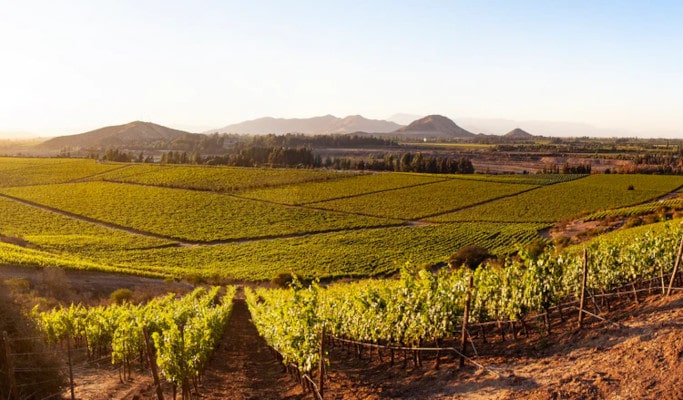
Chile is known worldwide for its award-winning Bordeaux blends, which are characterized by intense fruit aromas, powerful structure and velvety tannins. Regions such as the Maipo Valley and the Colchagua Valley are pioneers in the production of first-class wines.
-
Characteristics:
- Aromas of blackcurrant, ripe cherries, chocolate and tobacco.
- Powerful tannins and a firm body, often accompanied by an elegant smokiness.
-
Influence of the Andes climate:
- The proximity to the Andes and the cool Humboldt River have a positive influence on the climate.
- Large temperature fluctuations between day and night promote the slow ripening of the grapes, which gives the wines concentration and freshness.
Australia: opulence and complexity
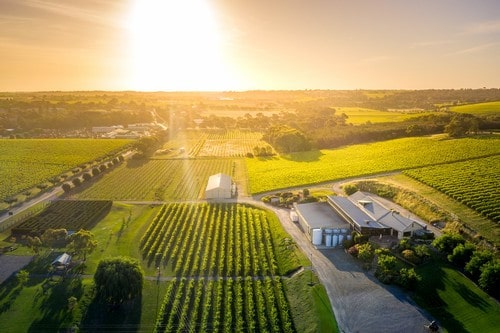
Australia, particularly the McLaren Vale and Margaret River regions, have established themselves as producers of high-quality Bordeaux blends. These wines combine the structure and elegance of a classic Bordeaux with the opulence that characterizes Australian wines.
-
Characteristics:
- Ripe aromas of blackcurrants, cassis, eucalyptus and spices.
- Full-bodied with ripe, silky tannins.
- A balanced combination of fruity richness and mineral freshness.
-
Australia’s terroir:
- Both Margaret River and McLaren Vale offer a maritime climate with warm days and cool nights, similar to the conditions in Bordeaux.
- The soils are rich in clay, gravel and sand, which provides nutrients and drainage for the vines.
Canada: Freshness and precision
Canada may not be the first country that comes to mind when thinking of Bordeaux blends, but the Niagara Peninsula (Ontario) and Okanagan Valley (British Columbia) regions are increasingly producing wines that are prized for their precision and elegance.
-
Characteristics:
- Aromas of red berries, cranberry, cherry and earthy notes.
- High acidity and medium tannins that give the wines freshness and structure.
-
Cool climate zones:
- The proximity to large lakes in Ontario (Niagara Peninsula) and the cool nights of the Okanagan Valley promote the development of complex aromas.
- The slow ripening of the grapes ensures wines with excellent balance and drinkability.
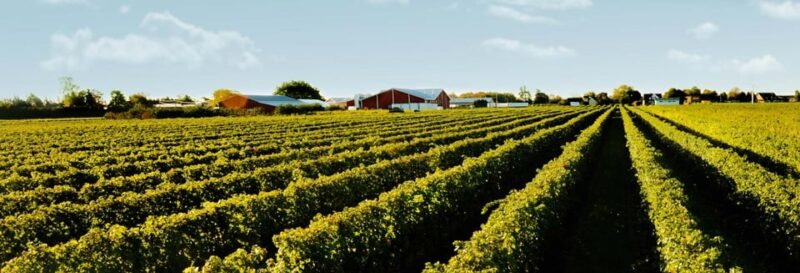
South Africa: spiciness and depth
South Africa, particularly the Stellenbosch, Franschhoek and Wellington regions, have produced Bordeaux blends known for their spicy aromas and earthy depths. These wines reflect the unique terroir of the Cape region.
-
Characteristics:
- Aromas of blackcurrants, plums, tobacco, cedar wood and exotic spices.
- Strong tannins and a full-bodied style, often with a pleasant spiciness and mineral notes.
-
Influence of the Cape region:
- The Mediterranean climate with cool winds from the Atlantic and Indian Oceans creates ideal conditions for growing Cabernet Sauvignon and Merlot.
- The diverse soils (granite, slate, sandstone) give the wines depth and complexity.

USA: Intensity and sophistication
The USA, particularly the Napa Valley in California, has produced world-class Bordeaux blends. The term “Meritage” (a combination of “Merit” and “Heritage”) is used to describe Bordeaux-style wines that are characterized by their quality and style.
-
Characteristics:
- Aromas of black cherries, blueberries, cassis, vanilla and mocha.
- Powerful, dense structure with ripe tannins and often a hint of oak from ageing in new barrels.
- Intensity and opulence without losing its balance.
-
Terroir of the Napa Valley:
- Hot days and cool nights promote even ripening of the grapes, while the soils (a mixture of volcanic rock, gravel and sand) add complexity to the wines.
- Winemakers in Napa Valley often use innovative techniques to bring out the best characteristics of each grape variety.
The New World impressively demonstrates that Bordeaux blends are far more than just a French phenomenon. Each of these countries – whether New Zealand, Chile, Australia, Canada, South Africa or the USA – produces its own interpretation of this classic style and enriches the wine world with an impressive variety of aromas and textures. Whether fresh elegance, powerful structure, opulent richness or spicy depth – Bordeaux blends from the New World are a feast for wine lovers.
4. What do Bordeaux blends go with? Perfect food pairings
Bordeaux blends are among the most versatile wines when it comes to food pairing. Their structure, balance of fruit, acidity and tannins as well as their often earthy and spicy aromas make them an ideal companion for a variety of dishes – from meat and cheese to vegetarian options.
General principles for food pairing
Why Bordeaux blends are so versatile
-
- Bordeaux blends are known for their complexity and complexity. The combination of ripe fruit aromas, firm tannin structure and refreshing acidity allows them to accompany both rich and delicate dishes.
- The versatility also results from the different proportions of grape varieties in Bordeaux blends: Cabernet Sauvignon-dominated wines go particularly well with savory dishes, while Merlot-dominated blends are more flexible due to their fruitiness and softness.
Tannins and acidity: how they influence food pairing
-
- Tannins in Bordeaux blends interact excellently with fat and proteins. They help to tame the texture of food (e.g. fat in steak or stews) and cleanse the palate, enhancing enjoyment.
The often pronounced acidity in Bordeaux blends acts as a counterbalance to rich, savory or creamy dishes while enhancing the flavors of dishes with acidity such as tomatoes or dark sauces.
- Tannins in Bordeaux blends interact excellently with fat and proteins. They help to tame the texture of food (e.g. fat in steak or stews) and cleanse the palate, enhancing enjoyment.
Fruity and earthy flavors as a bridge between wine and food
-
- The aromas of blackcurrants, cherries, plums and sometimes spices and tobacco create a connection with ingredients such as red fruits, dark sauces or grilled meat.
- Earthy notes (e.g. leather, tobacco, truffle) harmonize well with game, mushrooms or dishes seasoned with herbs such as rosemary and thyme.
Classic dishes and Bordeaux blends
Red meat: steak, rack of lamb and game
Bordeaux blends are an excellent match for red meat, as their tannins balance out the fat in the meat and emphasize the intense aromas.
- Steak:
Cabernet Sauvignon-dominated blends with strong tannins and notes of blackcurrant and oak are particularly ideal.
Tip: A Bordeaux blend from Margaret River (Australia) perfectly complements a grilled ribeye steak with herb butter. - Rack of lamb:
Merlot-dominated blends, as they often come from New Zealand, go perfectly with rack of lamb with a herb crust. Their soft
fruitiness and velvety tannins underline the delicate taste of the lamb. - Game (e.g. venison stew):
Bordeaux blends from Chile (e.g. Maipo Valley) with intense notes of dark fruit, spices and a hint of smoke harmonize perfectly with game dishes. The strong structure complements the spicy, hearty aroma of venison ragout.
Braised dishes: Boeuf Bourguignon or oxtail ragout
Bordeaux blends with their deep fruitiness, velvety tannins and ageing potential are perfect partners for slowly braised dishes.
- Boeuf Bourguignon:
A Bordeaux blend from Australia complements this classic French dish with its fruity richness and spice.
The tannins work harmoniously with the fat of the beef and the depth of the red wine sauce. - Oxtail ragout:
Bordeaux blends from South Africa’s Western Cape (e.g. Franschhoek, Stellenbosch or Wellington) offer a spicy note and rich texture that harmonizes perfectly with the intensity of an oxtail ragout.
Cheese: hard cheese such as Comté, Gruyère, Cheddar or blue cheese
Cheese is a classic partner for Bordeaux blends, especially mature wines that are characterized by tertiary aromas such as tobacco, leather and cedar wood.
- Hard cheeses (e.g. Comté, Gruyère, Cheddar):
Cabernet Sauvignon-dominated Bordeaux blends from California (e.g. Napa Valley) offer an ideal balance of fruit and structure to emphasize the nutty and spicy notes of hard cheeses. - Blue cheese:
Bordeaux blends from Canada (Niagara) with a slightly higher acidity harmonize well with the creamy and spicy intensity of a blue cheese.
Vegetarian dishes: Grilled portobello mushrooms, eggplant casserole
Bordeaux blends are surprisingly versatile when it comes to vegetarian dishes, especially when they contain earthy flavors and umami-rich ingredients.
- Grilled portobello mushrooms:
A Merlot-dominated Bordeaux blend from New Zealand (e.g. Hawke’s Bay) brings fruity notes and velvety tannins that harmonize well with the smoky, meaty character of the mushrooms. - Eggplant casserole:
Bordeaux blends from Chile, with their fruity and spicy notes, pair well with tomato-based dishes and eggplant. The acidity of the wine balances out the natural sweetness of the tomatoes and enhances the herbal flavors.
Whether paired with meat, cheese or even vegetarian dishes, Bordeaux blends are true all-rounders that go well with a wide variety of dishes thanks to their diverse aromas and textures. Their tannins and acidity provide balance, while their fruity and earthy notes create a harmonious combination with a wide variety of dishes. From steak to eggplant casserole, from boeuf bourguignon to blue cheese: Bordeaux blends take your food to a new level of enjoyment.
5. Recipes: The perfect way to enjoy Bordeaux blends
Bordeaux blends are not only versatile in taste, but also perfect accompaniments for a wide variety of dishes. Below you will find four classic recipes that reach culinary heights when paired with a well-chosen Bordeaux blend. Each wine recommendation is based on the typical characteristics of the respective region and grape varieties.
Recipe 1: Rack of lamb with herb crust
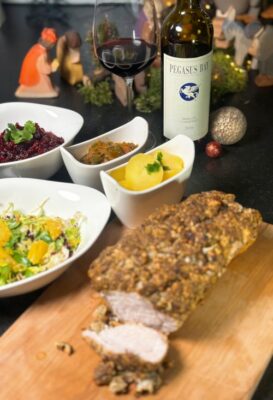
Why does a Bordeaux blend from South Africa go perfectly with this? A fruity and tannic Bordeaux blend from Stellenbosch, Franschhoek or Wellington brings just the right combination of structure and fruitiness to complement the intense flavors of herb-crusted rack of lamb. The strong tannins interact with the fat of the lamb, while the fruity notes of blackcurrant and plum underline the spicy herb crust. At the same time, the freshness of the South African blend ensures a harmonious balance.
-
Wine recommendation:
- A Bordeaux blend from Wellington, such as the Accordance from Mischa Estate Wines, is an ideal choice. It combines ripe fruit aromas with spicy and slightly smoky nuances.
2020 Mischa Estate Accordance, Mischa Estate Wines, Wellington, South Africa
- A Bordeaux blend from Wellington, such as the Accordance from Mischa Estate Wines, is an ideal choice. It combines ripe fruit aromas with spicy and slightly smoky nuances.
-
Ingredients:
- 1 rack of lam2 tbsp Dijon mustard
- 100 g breadcrumbs
- Fresh herbs (e.g. rosemary, thyme, parsley)
- 2 cloves of garlic (chopped)
- salt, pepper
- olive oil
-
Preparation:
- Season the rack of lamb with salt and pepper and coat with mustard.
- Mix the breadcrumbs with the chopped herbs, garlic and olive oil and press the mixture onto the rack.
- Cook in the oven at 200 °C for about 20 minutes (depending on the desired degree of doneness).
- Leave to rest for 5 minutes, cut into pieces and serve with a glass of Chilean Bordeaux Blend.

Recipe 2: Boeuf Bourguignon
Why is a powerful Bordeaux blend from Australia ideal? Boeuf Bourguignon, a classic of French cuisine, is elevated to a new level with a Bordeaux blend from McLaren Vale. The concentrated fruit flavors and spicy depth of the Australian blend pair perfectly with the rich sauce and braised meats. The tannins help to balance the fat of the dish, while the aromas of cassis, eucalyptus and spice create a harmony of flavors.
-
Wine recommendation:
- A powerful blend like the Little Demon Cabernet Merlot from McLaren Vale provides the necessary structure and aromatics.
2020 Maxwell Little Demon Cabernet Merlot, Maxwell Wines, McLaren Vale, Australia
- A powerful blend like the Little Demon Cabernet Merlot from McLaren Vale provides the necessary structure and aromatics.
-
Ingredients:
- 1 kg beef (e.g. shoulder)
- 2 carrots, 2 onions
- 200 g mushrooms
- 2 cloves of garlic
- 500 ml red wine (ideally an Australian Bordeaux blend)
- 250 ml beef stock
- bay leaf, thyme
- salt, pepper, olive oil
-
Preparation:
-
Dice the meat, season with salt and pepper and fry.
-
Dice the vegetables, sauté briefly and deglaze with red wine.
-
Add the stock, herbs and meat, cover and simmer for about 2 hours.
-
Enjoy with a glass of Australian Bordeaux Blend.
-

Recipe 3: Eggplant moussaka
Why does a Bordeaux blend from New Zealand work? A Bordeaux blend from New Zealand, especially from Hawke’s Bay, with its relatively high Merlot content, perfectly complements the creamy and aromatic texture of eggplant moussaka. The soft fruitiness and moderate tannins harmonize perfectly with the tomato and spice notes of the moussaka, while the freshness of the wine balances out the rich aromas.
-
Wine recommendation:
- A blend like the “Coleraine” from Te Mata brings the perfect combination of fruit, elegance and gentle structure. By the way: Coleraine is one of New Zealand’s most famous and best-rated wines.
2018 Te Mata Coleraine, Te Mata Estate, Hawke’s Bay, New Zealand
- A blend like the “Coleraine” from Te Mata brings the perfect combination of fruit, elegance and gentle structure. By the way: Coleraine is one of New Zealand’s most famous and best-rated wines.
-
Ingredients:
- 2 large eggplants
- 400 g minced meat (optionally replace vegetarian with lentils)
- 1 tin of tomatoes
- 2 onions
- 2 cloves of garlic
- Bechamel sauce
- olive oil, cinnamon, oregano, salt, pepper
-
Preparation:
- Slice the eggplants, season with salt and fry briefly.
- Fry the minced meat (or lentils) with the onions, garlic and tomatoes, season.
- Layer the eggplants, meat sauce and béchamel sauce in an ovenproof dish and bake at 180 °C for 30 minutes.
- Serve the dish with a fruity Bordeaux blend.
Recipe 4: Cheese platter with soft, hard and blue cheese
Why does a spicy Bordeaux blend from Canada fit the bill? Cheese and wine are a classic pairing, and Bordeaux blends from Canada, particularly Niagara, offer the perfect spice and depth to accompany a cheese board of hard and blue cheeses. The bold tannins harmonize with the salty character of blue cheese, while the fruity notes enhance the nutty flavors of hard cheeses.
-
Wine recommendation:
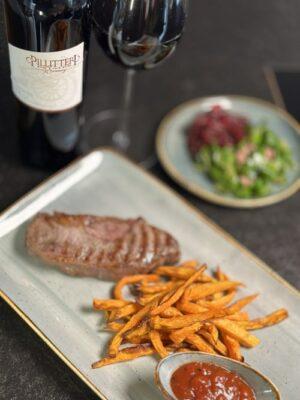
- The Pillitteri Cabernet Merlot is a great representative of Canadian Bordeaux blends that shines with its spice and structure.
2018 Pillitteri Cabernet Merlot, Pillitteri Estates Winery, Niagara, Canada
- The Pillitteri Cabernet Merlot is a great representative of Canadian Bordeaux blends that shines with its spice and structure.
-
Cheese selection:
- Soft cheese: Brie
- Hard cheese: Allgäu mountain cheese, Comté, Gruyère, Cheddar.
- Blue cheese: Roquefort, Gorgonzola, Stilton.
- Dried fruit, walnuts and fig bread to complement.
-
Serving suggestion:
- Arrange the cheese platter with the cheeses and garnishes mentioned.
- Pour a glass of Cabernet Merlot from Pillitteri and enjoy the aromas.
Conclusion
These four recipes show just how versatile Bordeaux blends can be. From a tannic blend from South Africa for rack of lamb to an elegant, creamy wine from New Zealand for vegetarian moussaka – the right combination of food and wine brings out the best of both worlds. Try these recipes and enjoy Bordeaux blends in a new, inspiring way!
