



Uncategorized
Rosé – the wine for the whole year

Jun
Content
Finally the summer is full, with a lot of sun and correspondingly high temperatures. We are now spending a lot of time outside in the countryside. And also eating and drinking in the open air is booming again and, thanks to low incidences, also in the company of friends. Whether in the outdoor area of gastronomy, whether on private balconies and terraces, on the beach or on the picnic blanket: Right now, the internal clock changes to rosé. This pink wine is not only a light, refreshing and fruity drink for the summer, but also the perfect choice for the whole year.
Although there are still isolated voices, often from the camp of seasoned, male red wine drinkers, who deny this type of wine to be a real wine, this pink juice is hip. For years, these wines have enjoyed a growing popularity. And so in 2020, the market share of rosé wines in Germany has risen by one percentage point to twelve percent.
But what exactly is rosé? How is this popular pink drink made? Which dishes go best with rosé wines? You can get answers to questions and interesting facts about rosé from Cellardoor24 in this blog article.
What is rosé? A definition
Rosé or rosé wine is a bright red looking wine. According to the EU regulation, it must have been made from light-coloured pressed red wine grapes. A blend or a cuvée of different red wine varieties is permitted. Decisive for the shade is the so-called maceration time. The longer the contact of the must with the mash, i.e. the porridge of pulp, seeds and berry skins, the more intense the color of the later wine. The color spectrum ranges from delicate salmon colors to tomato or cherry red. After color leaching, rosé wine is processed and fermented like white wine.

What is not rosé?
According to the regulations of the responsible EU Commission, blends of white and red wines within the EU may not be referred to as rosé. This also affects the rosé-like types Badisch Rotgold (Baden), Rotling (Franconia), Schieler (Saxony) and Schillerwein (Württemberg), which are popular in Germany, during their production white and red wine grapes or their mash blended or processed. become. An exception applies only to the production of sparkling wines.
Even the sometimes slightly reddish wines from the grape varieties Grau burgundy, Gewürztraminer and Grenache Gris, called Vin Gris in France, may not be called rosé within the EU. Vin Gris are wines made immediately after pressing the grapes. The maceration time is reduced to almost zero, and although one would expect the color of the finished wine to be gray, the result is actually much paler than some of the lighter rosé wines made with limited skin maceration or saignée.
How is rosé made?
Although the rough features of wine production are the same for red, white and rosé wines, it is the subtle differences in taste, color and production methods that make rosé wines so unique.
After harvesting in the vineyard, the grapes are taken to the wine cellar, where the grape juice is fermented to produce alcohol. Compared to red wine, however, the finished rosé has significantly fewer anthocyanins (color pigments), tannins (tannins) and flavorings. This is also the result of the maceration period, which can take up to four weeks with a red wine. No wonder, then, that the red wine has significantly more tannin and a more intense color. The color and taste differences between the individual rosé types arise not only because of the different maceration times, but of course also because of the variety of grape varieties used. Here are the main processes for the production of rosé:
Direct pressing
This is a very common method in which the red grapes are gently pressed after harvesting. In contrast to the maceration technique, the juice is withdrawn almost immediately from the peels. This quick separation of peel and juice gives just enough color to make a pink wine. Not infrequently, some winemakers add some red wine at the end to achieve the desired color.
Many winemakers, especially in Provence and Languedoc-Roussillon, take this traditional approach to producing rosé. The grapes are usually grown and selected exclusively for rosé production. They are often harvested early, with less sugar (must weight, measured, for example, in Öchsle or Brix) to keep the later alcohol content low and at the same time increase the acidity. Compared to the more modern saignée method, direct pressing produces delicate aromas and animating taste compounds such as strawberry, light cherry and rhubarb. In Germany, such wines are referred to as weißherbst, in Austria as Gleichgepresster and in Switzerland as Süßdruck.
Short maceration time
Some winemakers leave the grapes on the skin for a few hours (maceration, maceration period) before separating the juice from the mash, which gives the finished product a more intense color. This soaking usually takes between 4 and 48 hours, depending on the style of rosé being made. This prolonged skin contact can intensify the texture and body of the wine and expand its range of applications as a food companion.
As soon as the peels are macerated to the taste of the winemaker, the juice is removed from the peels and fermented like a white wine. The French affectionately call such a wine “Rosé d’une Nuit” (Rosé of a Night).
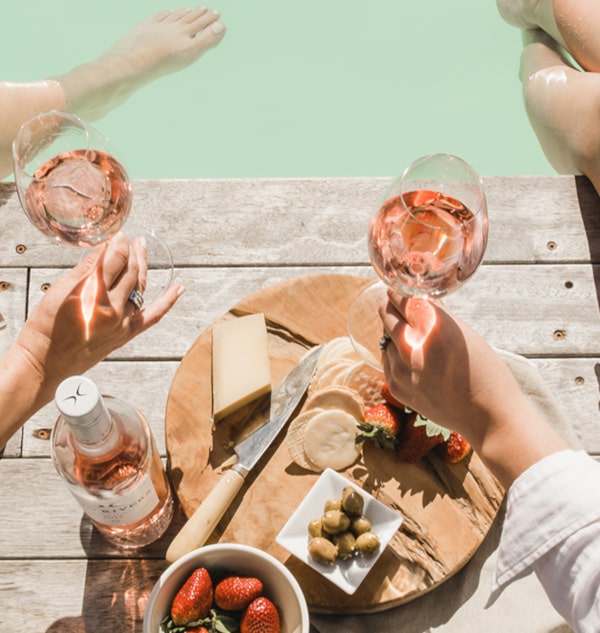
The Cellardoor24 wine recommendation: Isle of Beauty Rosé by Two Rivers Wines, Marlborough New Zealand
A grandiose homage by winemaker David Clouston to his childhood love of the South of France.
Saignée (bleeding)
The term Saignée comes from the French and means “bleeding out”. The wines produced according to the Saignée method are a by-product of red wine production. At the beginning of fermentation, a small amount of juice is withdrawn to increase the concentration of the remaining juice. Similar to reducing or boiling a sauce to intensify the flavors. Once the juice is separated, the winemaker has a few options. He can pour it away, use it to fill wine barrels or make a rosé.
Rosé wine produced in this way tends to have a more intense pink color and darker aromas of blackberries, raspberries and berry jam. However, since the extracted must has a high sugar content, these wines can be very alcoholic and clumsy.
Brightening of red wine (decolorization)
The last method of rosé production is decolorization. In this process, natural absorbents such as charcoal, specifically activated carbon, are used to remove the color from a red wine. Charcoal has a sufficiently large surface area relative to weight and can absorb dyes and other phenols in wine. Since this process often removes acidity and different amounts of flavors, rosé wines of lower quality are generally produced than with the methods listed above. In the quality wine segment, this process therefore has no significance.
Mixing white wine and red wine
This method is very rarely used in the production of rosé. However, the juice of white grape varieties can contribute to more acidity, which can be important for balance in warmer growing areas. In fact, this process is used almost exclusively in the production of rosé sparkling wines, such as rosé champagne. Here the cellar masters decide to add about 10 – 20 percent of the red varieties Pinot Noir and / or Pinot Meunier to the white Chardonnay. They give the wine the distinctive shades and other valuable aromas.
What does rosé taste like?
The typical aromas of rosé wine are reminiscent of red fruits, especially berry fruits, such as strawberries, raspberries, cherries and flowers, such as roses or violets. Citrus fruits and watermelon can be found as well as rhubarb, herbs and mineral, salty notes. Of course, the taste depends very much on the grape variety from which the rosé wine is made. Pretty much every red grape variety is used to make rosé, and it largely depends on the region of origin. In Provence, for example, people mainly rely on Grenache, Cinsault, Mourvedre, Carignan and Syrah, while in the overseas regions Pinot Noir, Merlot or Cabernet Sauvignon are often used.
Each grape variety gives the finished wine its own subtle personality, but regardless of the grape variety, most rosés have a few characteristics in common: refreshing acidity, low alcohol content, no oak ripening and fresh berry flavors.

What types and styles of rosé are there?
Rosé wines can be made still, semi-pearling or sparkling and with a wide range of sweetness levels, Rosé wines from the Old World are usually bone dry. Rosé wines produced in the New World are often sweeter and have a more pronounced fruit flavor, which is due to differences in climate and production methods. Of course, there are exceptions where New World winemakers take the style and methods of Old World producers as a model.
The classic rosé wines from France
Provence Rosé
Growing regions: Provence
Main grape varieties used: Grenache, Cinsault, Syrah, Mourvèdre
Taste: dry
Aromatics: strawberry, rose petals, citrus notes, watermelon, herbs, sea salt
Food accompaniment: goes well with vegetables, seafood and meat.
Rosé is considered in Provence as a way of life and not just another wine. The short maceration on the berry skin gives the Provencal rosé a lighter color and a finer taste profile. Instead of large, intrusive fruitiness, this rosé is rather herbaceous, crunchy and versatile.
Tavel Rosé
Growing regions: Tavel, Southern Rhône Valley
Main grapes used: Grenache, Cinsault, Syrah
Taste: very dry
Aromas: Tart berries, orange zest, stony minerality. Tavel is spicy, rich and very dry. Tavel has distinct fruit notes, but with a more earthy and nutty note.
Food accompaniment: herb sausages, BBQ Brisket
Tavel is an appellation in France that focuses entirely on dry rosé. It is the only AOC on the Rhône that by law exclusively produces rosé wines.
Compared to Provence, the rosés in Tavel have longer contact with the berry skin. The result is wines with deeper colors, fruitier aromas and tannin, which can also be stored longer. It is allowed in Tavel to add white grapes and their juice before fermentation. Three white grapes – Clairette, Picpoul and Bourboulenc – are allowed in this appellation. However, they must be pressed together with the red grapes.
Bordeaux Rosé
Growing region: Bordeaux AOC
Main grapes used: Cabernet Sauvignon, Cabernet Franc, Carménère, Petit Verdot, Merlot
Taste: very dry
Aromas: strawberry, gooseberry, grapefruit, notes of peppers, blackcurrant and spices
Accompaniment: Grilled fish, fresh vegetables, chicken
To maintain freshness, the Cabernet Franc grapes used to make Bordeaux Rosé are usually harvested in the early hours of the morning. After these grapes have been gently pressed and stored at a cool temperature, the fresh fruit and bright, acidic aromas begin to solidify. Bordeaux rosé usually has the classic pale pink color typical of French rosé wines.
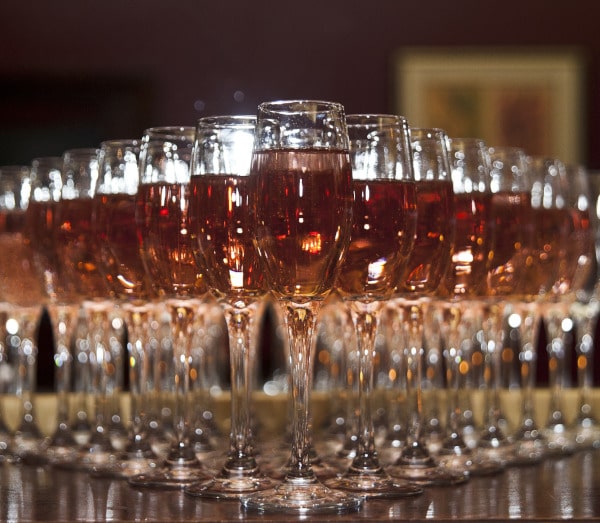
The Cellardoor24 wine recommendation: Rosé No. 1 from No.1 Family Estate, Marlborough, New Zealand. With traditional bottle fermentation (Méthode Traditional or Méthode Marlborough) classically produced sparkling wines of the extra class.
The classic rosé wines from Spain
In Spain, rosé wine is commonly referred to as rosado. In the past, Spanish Rosado producers produced simpler wines that were easier to drink than those from other countries, but due to the increasing popularity, the quality of Rosado has greatly improved. Overall, these wines have a much deeper color than French rosé wines.
Navarre Rosado
Growing region: Navarre D.O.
Main grapes used: Grenache, Tempranillo, Cabernet Sauvignon and Merlot
Taste: Very dry
Flavours: strawberry, raspberry, sweet cherry
Accompaniment: herb sausages, hearty stews, fish and seafood, tapas
This Rosado variety is named after the Spanish region of the same name. Producers in this region specialize in both summer rosados for the pool, which are best enjoyed alone, and fuller-bodied, complex rosados suitable for eating.
The Saignée method dominates the production in this region, and the Rosados from Navarre are among the highest quality Rosado wines available. Especially if these were produced purely from the grape variety Grenache.
Rioja Rosado
Growing region: Rioja D.O.Ca.
Main grapes used: Tempranillo, Mazuelo, Graciano, Carinena, Garnacha
Taste: Very dry
Aromas: sweet cherry, strawberry, raspberry, flowers
Accompaniment: herb sausages, hearty stews, fish and seafood, tapas
The topic of barrel maturation plays an important role in Rioja, interestingly also in rosé wines (Rosados). There are 3 main types of Rioja Rosé:
Joven, the youthful rosé. It does not have to be matured in barrels, usually comes from the stainless steel tank and can be adapted in taste and color during maturation.
Crianza is a Type of Rioja that matures for a total of 12 months, half of that time being spent in a barrel.
Finally, the Reserva variant of Rioja matures for up to two years, with at least six months spent in barrels.
The classic rosé wines from Italy
In Italy, the correct term for rosé is rosato. Rosato is produced throughout the country, with the climate and local grape varieties having the greatest impact on the taste profile and style.
Northeastern region, especially Veneto
In the cooler northeastern region of Italy, more delicate rosatos are usually produced. The term used in Italy for a delicate rosato is “chiaro”, which translates to “light” or “pale”. A chiaretto is usually dry and impresses with red berries and tangy citrus fruits on the nose. On the palate it shows ripe strawberries, raspberries and some grapefruit. This rosato goes well with Mediterranean cuisine, seafood and cream cheese.
Central Region
In central Italy, rosato producers are known for making their wine in almost cherry pink colors. Here, too, these light shades are achieved by a limited skin maceration and produced almost exclusively from the grape varieties Sangiovese and Montepulciano. The Rosatos from Abruzzo, produced from Montepulciano can be recognized by the name Cerasuolo.
Rosé wines from the New World
Rosé from Australia
Wines from Australia have gained a lot of popularity in Germany. The very fruity and full-bodied rosé wines are also included. Rosé is actually produced throughout Australia, as the grapes from each region benefit from certain climatic characteristics.
The Grenache grape variety is ideal for the production of pink wines not only in France and Spain. It is most commonly grown in the Barossa Valley and McLaren Vale regions and can be considered the home of this grape variety in Australia. The Australian wines from these regions are light pink or red, slightly sweet and full of berry aromas.
The Cellardoor24 wine recommendation: Little Demon Grenache Rosé from Maxwell Wines, McLaren Vale, Australia. So demons are always allowed to haunt us
Rosé wines from the Western Australian region pride themselves on their high quality. Most Western Australian rosé wines are made from Cabernet Sauvignon blends and tend to be lighter and sweeter than other Australian rosé wines.
Although many popular still wines are produced in the Yarra Valley, this valley is known for Australia’s rosé sparkling wines. Pinot Noir grapes dominate and the wines are spicy and well structured.
The cooler climate of the Adelaide Hills produces fresh and dry rosé. Most rosé wines from this region are made from Cabernet Sauvignon or Pinot Noir and have a delicate, rounded fruit character.
Rosé from New Zealand
New Zealand wines have earned an enormous reputation in recent years. New Zealand, with its Climate of the Pacific Ocean and high mountains, offers ideal conditions for elegant, fruity wines. While consumers worldwide have white wines from the Sauvignon Blanc grape variety on their list, the crisp and fresh rosé wines of the island state are not yet so well known. But especially in the particularly cool regions where the Pinot Noir grape variety has established itself well, such as Marlborough and Central Otago, great rosés are produced in addition to fabulous red wines. Rosé sparkling wines are also included.
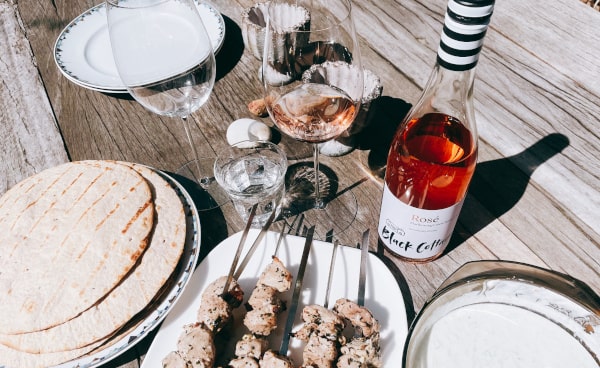
The Cellardoor24 wine recommendation: Black Cottage Rosé from Marlborough, New Zealand. Crispy-fresh, fruity and easy to drink.
The Cellardoor24 wine recommendation: Amisfield Pinot Noir Rosé, Central Otago, New Zealand. From the coolest growing area in New Zealand.
Here are a few recommendations from other wine countries. Also among the Canadian wines and the wines of South Africa there are delicate rosé wines.
The Cellardoor24 wine recommendation from Canada: Racina Pinot Rosé by Pillitteri, Niagara, Canada
The Cellardoor24 wine recommendation from South Africa: Hill&Dale Rosé Merlot, Stellenboch, South Africa
How do I store and serve rosé?
Do I have to store rosé for a few years? Rosé thrives on its fresh fruit and animating acidity. It should be consumed rather youthfully. Characteristic of this fast pace is the packaging in white glass. Of course, the winemaker wants to show off the attractive color of the wine, but at the same time a white glass bottle signals the restrictions on storage potential. Wine is also just a light-sensitive food and stimulant, like coffee and tea and should be darkly packaged.
Rosé should always be served chilled, with about 6 – 8 degrees Celsius. On a hot summer day on the terrace, the wine in the glass very quickly takes on the ambient temperature. So pay attention to the cooling of the bottle during grilling or eating. A champagne cooler or bucket with ice cubes, a nearby stream or a cooling cuff would be a good option.
In which glasses is rosé served? You can use any white wine glass, whether a Riesling glass lipped at the edge or a Chardonnay glass, does not matter. There’s even a trend to use bulbous red wine glasses to give more space to the fine, red-berry aroma. But then please keep an eye on the faster heating in the larger vessel,
Should rosé wine be decanted? You don’t have to decant rosé, but using a decanter or carafe won’t hurt either. As with the use of larger glasses, more complex aromas in wine come to light more easily.
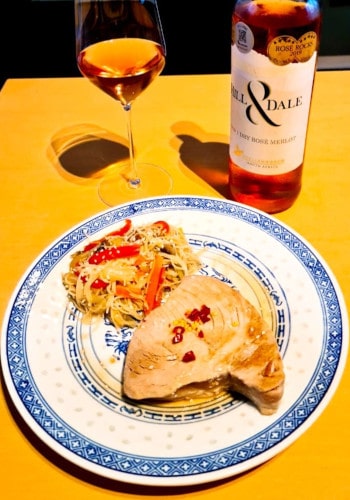
Which food goes well with rosé?
Rosé is a sensationally versatile and yet largely underestimated food companion. The fruity aromas make it a particularly good companion to spicy dishes. The lightness of rosé goes well with sushi and salads. Because it’s served cold, it’s very popular with outdoor dining, including picnics and barbecues.
Slightly sweet rosé goes well with grilled meat, roasts, rich sauces
Dry rosé goes well with grilled chicken, fish and shellfish, as well as vegetables and salads
