



Game and wine, Wine and Dine, Wine and Food
St Martin’s Day with goose and wine

Oct
Content
- Crispy indulgence meets fine wines
- Who was St Martin and why is a goose ‘sacrificed’ to him?
- Why is there a festive feast on 11 November?
- Eine Gans macht Geschichte: Der Martini-Brauch bei unseren Nachbarn
- The goose as a symbol: Why this particular animal?
- How the St Martin’s tradition has developed today
- Wine with goose: Why is wine so important?
- Which grape varieties and wines go well with goose?
- Tips for choosing the right wine for your Martini goose
- The 3 most popular roast goose recipes
- Conclusion: tradition meets a thirst for adventure
Crispy indulgence meets fine wines
November has it all: the days are getting shorter, the nights longer and we find every excuse to indulge in culinary delights. So it’s no wonder that 11 November, St Martin’s Day (Martini), is very popular with us in culinary terms. Why? Because one of the crispiest, juiciest and most delicious festive traditions is celebrated on this day: the Martini goose meal.
And no, we’re not talking about a bizarre combination of martini cocktails and goose meat – although that would certainly be a fun idea. It’s all about goose, roasting and side dishes. But the feast would only be half as good without the right wine accompaniment!
But why goose on 11 November? And why shouldn’t the wine be missing?

Who was St Martin and why is a goose ‘sacrificed’ to him?
St Martin’s Day celebrates Martin of Tours, a man who was known for his modesty and charity – so much so that he was even to become a bishop. Martin was not so keen on this career, however, and to avoid the appointment he hid in a goose stall. But geese wouldn’t be geese if they didn’t chatter loudly – and that’s exactly what they did! The tell-tale chattering led people straight to Martin and so, despite his resistance, he was appointed bishop. This story made the goose the symbolic animal of St Martin’s Day – and today we can look forward to a delicious goose dinner!

Why is there a festive feast on 11 November?
The date is no coincidence. Not only does it mark St Martin’s Day, but it is also at the end of the harvest season. Traditionally, this was the last opportunity to feast before Lent – and what could be more festive than a roast goose filling the table with its delicious aroma? A Martini goose is the perfect bridge between autumn’s rich harvest and winter’s contemplation.
A goose makes history: our neighbours’ Martini tradition
The tradition of eating a goose on St Martin’s Day has its roots in Germany. In this country, the crispy goose not only fills bellies, but also hearts, as the meal is closely associated with family celebrations, lantern processions and the start of the cold season. Particularly in southern German regions such as Bavaria and Baden-Württemberg, eating St Martin’s goose is a real treat that is best enjoyed in a convivial atmosphere.

The Martini goose is also a culinary highlight in Austria. Whether in Vienna or in the rural regions, it is served on 11 November! In typical Austrian style, the goose is often stuffed with chestnuts or baked apples – a feast for the senses! Especially in Viennese cuisine, the Martini goose and the matching wine have a firm place and are celebrated in restaurants as well as in private circles. The Austrians simply know how to enjoy themselves.
In Switzerland, especially in the Catholic areas, the tradition is also cultivated. Here, the focus is less on big celebrations and more on family gatherings where eating together takes centre stage. A goose, accompanied by regional side dishes such as rösti and winter vegetables, not only brings families together, but also brings warmth to the cold days.
Poland, on the other hand, has its very own version of the Martinmas goose. In the Wielkopolska region around the city of Poznan in particular, eating goose on 11 November plays a major role – and there is a double celebration here, as the day also coincides with Polish Independence Day. In Poland, the goose is often a little more strongly flavoured and is served with delicious side dishes such as buckwheat and sweet sauces.
The goose as a symbol: Why this particular animal?
You may be asking yourself: why a goose of all things and not, say, a chicken or a turkey? Well, the story of Martin and the cackling flock of geese explains how the goose conquered St Martin’s Day, but there’s more to it than that. The goose has always been an animal associated with the end of the harvest and the beginning of the winter months. In earlier times, the feathered fowl was seen as a sign of prosperity and was often the last big feast before the barren winter season began.
The goose therefore not only symbolises Saint Martin and his humble attitude, but also the connection between harvest time and festivity. It is a sign of abundance, a symbol of community and sharing – values that are emphasised on St Martin’s Day.
How the St Martin’s tradition has developed today
While the Martini goose used to be served mainly in rural areas as a family feast, today it has become a real culinary event. Many restaurants, especially in Germany, Austria and Switzerland, offer special goose menus in November, which often have to be booked for weeks in advance. Roast goose in all possible variations – from classic stuffing to modern interpretations – attracts gourmets who don’t want to miss out on this autumnal delicacy.

Not only that – there is now even goose to go! Many restaurants offer ready-made roast goose to take away at Martini time, perfect for those who prefer to avoid the oven but still don’t want to miss out on the tradition. So if you don’t fancy cooking yourself (and spending half the day basting the goose), you can sit back, relax and have a delicious goose delivered to your door.
The tradition has also survived at family celebrations – albeit in a modern form. While grandmothers used to sweat over the hot oven, today the work is often outsourced to restaurants. Nevertheless, the Martini goose remains an important occasion to gather with family and friends, eat together and ring in the cold season.
And those who like a festive atmosphere can visit one of the many St Martin’s markets. In addition to roast goose, there are often cultural highlights such as lantern parades and music. Many towns now also organise large culinary events around St Martin’s Day – goose weeks, goose menus and wine tastings attract gourmets and wine lovers alike.
Wine with goose: Why is wine so important?
Of course, a goose is a speciality in itself. Crispy skin, tender meat, the side dishes … you can really tuck in! But without the right wine, the whole thing is only half as good. The right wine brings out the flavours of the goose, cuts through the fat and brings out the best in the side dishes. A crisp white wine or an elegant red wine ensures that the food doesn’t seem too heavy and that the flavours dance on the tongue.
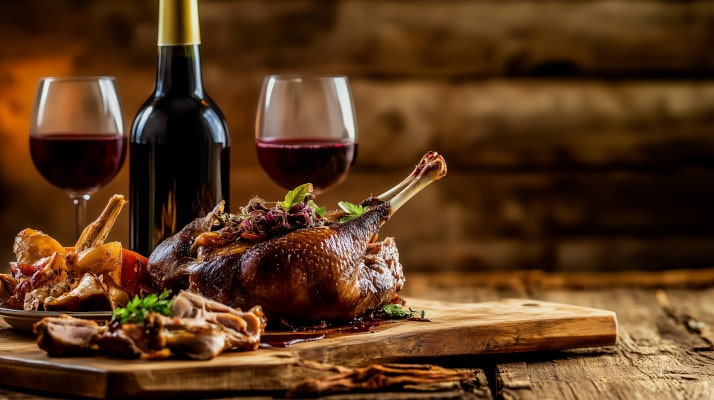
Imagine that: You bite into a piece of crispy goose skin, the fat melts on your tongue and a sip of fresh, mineral Riesling from Chile balances it out with lively acidity – a perfect harmony! Or how about a velvety Pinot Noir from New Zealand, which rounds off the earthy notes of the roast goose with its red fruit and mild tannins? So the wine is not just an accessory – it is the goose’s best friend!
So, grab a roasting tin, throw in the goose and get ready for a feast in a class of its own. And don’t forget: without the right wine to go with the goose, St Martin’s Day lacks that all-important spark – and we don’t want to miss out on that, do we?
Which grape varieties and wines go well with goose?
Below are some classic wines or grape varieties that have always been considered the perfect accompaniment to Martini goose. These wines have stood the test of time and go perfectly with the rich, hearty and often fatty goose and the typical side dishes such as red cabbage and dumplings.
Tried and tested classics to goose
Riesling
A dry Riesling is one of the most popular accompaniments to goose. Why? Because of its fresh acidity and crisp minerality. Riesling has enough vibrancy to balance out the fatness of the goose, and its flavours of citrus fruits, apples and peaches harmonise perfectly with sweet fillings such as apples or chestnuts.
When is Riesling a good choice? Especially good when the goose is prepared with sweeter fillings or fruity side dishes such as apple and red cabbage are on the table.

Pinot Noir (Spätburgunder)
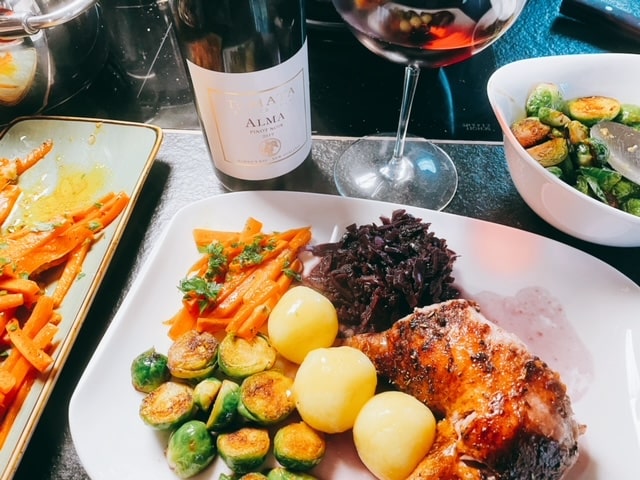
Pinot Noir – or the German variant Pinot Noir – is probably the classic par excellence when it comes to combining goose and red wine. Pinot Noir or Pinot Noir is an elegant, light-footed red wine with soft tannins and aromas of cherries, red berries and a slight earthiness that harmonises wonderfully with the goose and its roasted flavours.
When does Pinot Noir go well? Ideal with goose roasted in the oven and served with hearty, savoury side dishes such as red cabbage and dumplings. Pinot Noir or Pinot Noir from New Zealand, for example, is elegant enough to support the tender goose meat without overpowering it.
Weinempfehlung zur Gans: 2021 Amisfield Pinot Noir, Amisfield Wine, Central Otago, Neuseeland
Silvaner
Silvaner is a somewhat underrated white wine, but it is an excellent accompaniment to goose, especially in lighter preparations. Silvaner from Franconia is known for its earthy and mineral notes, which harmonise well with the rich flavours of goose. It has a moderate acidity that refreshes the palate without making the wine too dominant.
When is Silvaner a good choice? Especially if the stuffing and side dishes of the goose are not too sweet or fruity. It goes well with earthy flavours and less intense side dishes such as potato dumplings and Brussels sprouts.
Lemberger/Blaufränkisch
Lemberger, which is known as Blaufränkisch in Austria, adds strength and flavour. This red wine is somewhat stronger than Pinot Noir, but still offers enough freshness and fruit to go well with goose. With its dark berry flavours and spicy notes, it is an excellent accompaniment to stronger goose dishes, especially when the goose is served with spicy herbs or a more intense sauce.
When is Lemberger/Blaufränkisch suitable? With goose, which tends to be prepared in a rustic and flavoursome way, perhaps with strong herbs or a rich sauce. Also ideal with stronger side dishes such as roast potatoes or Brussels sprouts.
Gewürztraminer
Gewürztraminer is an exciting choice if you serve your goose with sweet side dishes or stuffing. This aromatic white wine impresses with exotic spicy notes and flavours of lychee, roses and honey. With its light residual sweetness and intense fruit flavours, it is the perfect partner for a goose with chestnut stuffing or sweet sauces.

When does Gewürztraminer go well? With sweet and fruity fillings, chestnuts, apple and red cabbage and rich sauces. A Gewürztraminer from New Zealand or Canada, for example, offers enough power to complement the goose and its side dishes wonderfully.
Gamay
A light-footed red wine made from the Gamay grape variety, such as a young Beaujolais, is an excellent accompaniment to goose. Gamay wines, including those from Canada, are fresh, fruity and low in tannins, which means they harmonise well with the tender goose meat. They are lighter than many other red wines, which makes them perfect for those who are not looking for an overly strong red wine.

When is Gamay or Beaujolais a good choice? Particularly good with a lightly prepared goose that is not overly flavoured. Also ideal for summer or milder days when you are looking for something light.
Wine recommendation for roast goose: 2016 EastDell Gamay Noir, EastDell Estates, Niagara, Canada
The classic goose wines are true all-rounders that have stood the test of time. Whether you prefer a fresh, acidic Riesling, an elegant Pinot Noir, which gently hugs the flavours, or a strong Lemberger for the more rustic goose variants – these wines perfectly accentuate the roasted goose meat. And if you like it a little more exotic, go for a Gewürztraminer or a Beaujolais. You can’t really go wrong – the main thing is that the wine gives you pleasure and rounds off the feast!
Goose reinterpreted with other grape varieties
You might be thinking: ‘Why shouldn’t I just go for the classic German Riesling or Pinot Noir?’ Good question – and sure, these are great wines. But why not think outside the box (or rather: outside the rim of the wine glass)? Wines from overseas – such as New Zealand, Chile, Australia, Canada or South Africa – offer new flavour experiences that can give your Martini goose that extra kick.
Sauvignon Blanc
When it comes to wines that bring pure freshness to the glass, Sauvignon Blanc is at the top of the list. This wine is the embodiment of liveliness, and not just because of its tangy acidity, but also because of its flavours, which immediately remind you of a sunny spring day. But don’t worry, Sauvignon Blanc also makes a grand entrance in the cool autumn months with Martini goose.
New Zealand’s Sauvignon Blancs are like an explosion of flavour in the glass. Typical flavours include tropical fruits such as passion fruit, lime, green pepper and gooseberry. Sometimes a hint of fresh grass or herbs is added – like a summer meadow in a glass.
The bright acidity is the hallmark of this wine. It cuts through the fatness of the goose as if it were made for it. The lively freshness of the wine brings out the roasted flavours of the goose and balances the richness of the dish wonderfully.
Why does Sauvignon Blanc go well with goose? In a classic goose with a sweet apple filling, the acidity of the Sauvignon Blanc from New Zealand acts as a refreshing contrast to the sweetness and fat. The tropical fruit flavours harmonise perfectly with the fruity stuffing and side dishes such as red cabbage. This wine is a real palate cleanser and ensures that every bite tastes fresh.
Chenin Blanc
Chenin Blanc is the chameleon among white wines. Whether dry, semi-dry or sweet – this grape variety can do it all! In South Africa, its new home, it shows its crispest and fruitiest side and provides a refreshing contrast to rich dishes.
Flavour: Imagine biting into a ripe, juicy green apple – that’s exactly how a Chenin Blanc from South Africa makes you feel. Citrus fruits, apple, pear and a light honey flavour are typical of this wine, combined with an invigorating acidity that awakens the palate.
Why does Chenin Banc go well with goose? Chenin Blanc is perfect if your goose is filled with sweet elements, such as chestnuts or apples. The freshness of the wine balances out the sweetness and ensures that the meal is not too heavy. It can also play wonderfully with savoury side dishes and sauces.
Semillon
Semillon is often the quiet type at the party that only turns out to be a real hit after a few glasses. In Australia, especially in the Hunter Valley, this grape variety shows its best side: sparkling, lively and surprisingly versatile.
Flavour: A young Semillon is like jumping into an ice-cold mountain lake – crisp, fresh and clear. With flavours of citrus, lime and sometimes even a hint of grass or straw, it is refreshing and light on its feet. When it matures for a few years, it often develops more complex notes of honey, nuts and dried fruit, but always remains beautifully fresh.
Why Semillon goes so well with goose? Semillon is ideal if you want to keep your goose light. The tangy acidity of the recommended New Zealand wine cuts through the fat of the goose beautifully, and its citrus freshness gives the dish a summery lightness – perfect if you want to banish the autumn blues.

Carménère
If you haven’t tried Carménère yet, then it’s high time you did! This Chilean grape variety is a real treasure for lovers of strong, flavoursome wines. Originally from France, it has found its second home in Chile and is developing into a star there.
Flavour: Carménère is like a velvety sofa to fall onto after a long day – soft, round and incredibly comfortable. It scores with intense flavours of dark fruits such as black cherry and blackberry, accompanied by spicy notes of paprika, cedar wood and sometimes a hint of chocolate. Its gentle tannins make it the perfect partner for savoury goose dishes.
Why does Carménère go well with goose? The dark fruit and spicy notes of a Chilean Carménère harmonise wonderfully with strong, hearty fillings and spicy sauces. So if your goose has a bit of ‘oomph’, Carménère is the right companion – it has enough power to keep up with the intense flavours.
Pinotage
Pinotage is like the rebellious teenager of wines – boisterous, powerful, sometimes headstrong, but when done right, simply irresistible. This South African grape variety is a cross between Pinot Noir and Cinsault, but don’t expect the elegance of a Pinot Noir. Pinotage goes its own way.
Flavour: With Pinotage, you have a real ‘bad boy’ in your glass: aromas of ripe plums, black cherries and mulberries mingle with strong notes of smoke, spices and sometimes even a hint of espresso or tobacco. It is powerful, sometimes even slightly smoky, with medium to strong tannins – a wine that draws attention to itself.
Why does Pinotage go with goose? If your goose comes with strong, savoury side dishes – perhaps roast potatoes or winter vegetables – then Pinotage is just the right partner. It has enough power to stand up to the intense flavours, and its fruity and spicy notes complement the goose meat perfectly.
Shiraz
Ah, Shiraz! This wine is like the muscular mate that always helps when you have to carry heavy furniture. It is powerful, flavoursome and a true classic, especially from the hot wine regions of Australia such as the Barossa Valley.
Flavour: Shiraz tastes as if a handful of dark berries had been thrown into a mortar and mixed with pepper and spices. Typical flavours are ripe blackberries, plums, blackcurrants – plus a rich pinch of black pepper, chocolate and sometimes a hint of smoke or leather. With its strong tannins, Shiraz is the ideal partner for intense, meaty dishes.
Why does Shiraz go well with goose? If your goose is strongly flavoured – perhaps with a hearty stuffing or a spicy sauce – then Shiraz is just the thing. Its dark fruit and spice notes go perfectly with hearty goose meat, and its power allows the flavours to really explode. Those who like intense flavours will love Shiraz, especially from Australia!
Wine recommendation for the St Martin’s goose: 2019 Maxwell ‘Silver Hammer’ Shiraz, Maxwell Wines, McLaren Vale, Australia
Wine recommendation for the goose: 2021 Longview Yakka Shiraz, Longview Vineyard, Adelaide Hills, Australia
Each of these wines has its own personality – from the fresh liveliness of Sauvignon Blanc or Chenin Blanc to the powerful flavour of Shiraz. Whether you are looking for a light companion or a powerful wine, these grape varieties from overseas offer the perfect complement to any goose recipe.
Tips for choosing the right wine for your Martini goose
The goose is crispy on the plate, the side dishes are steaming seductively and the sauce glistens like a lake of liquid gold. Everything seems perfect – until you serve the wrong wine. Of course we don’t want that! But don’t worry, with a few simple tips you can find the perfect wine to catapult your St. Martin’s goose into new dimensions of flavour.
Consideration of the filling and side dishes: sweetness, acidity and flavour
Let’s start with the basics: Stuffing and side dishes. A goose is never a solo show – it always comes with an ensemble of flavours that need to be considered. Imagine you have a goose stuffed with sweet apples and chestnuts and a side dish of red cabbage, which also has that sweet and sour flavour. A dry Riesling or a fresh Sauvignon Blanc would be a perfect match! The crisp acidity of these wines perfectly balances out the sweetness and brings freshness to the table.
But what if you choose a savoury filling with onions, thyme and dried fruit instead? A strong white wine like a Chardonnay or even a red wine like a Pinot Noir can work wonders. These wines have enough body and structure to keep up with the spicy flavours without overpowering the goose.
In short: sweet filling = crisp white wine, savoury filling = full-bodied white wine or elegant red wine.

How the fatness of the goose influences the choice of wine: white wine or red wine?
Now to the main protagonist herself: the goose. A goose is not exactly what you would call low-fat poultry. It is more like the butter among birds. And that’s exactly what makes it so delicious, but also demanding when it comes to wine.
Fat loves acid – that’s the little secret you should keep in mind when choosing wine. A wine with lively acidity cuts through the fat of the goose like a hot knife through butter. That’s why wines like Sauvignon Blanc, Riesling or a sparkling Semillon go so well with the goose. They “cleanse” the palate and ensure that after each bite you are ready for the next (which is of course only a good thing if you want to eat the whole goose).
But! Fat and wine is not just a white wine affair. Light red wines such as Pinot Noir are also great accompaniments to the goose, especially if the side dishes are rather hearty. A Pinot Noir has enough acidity to handle the fat, and its light tannins perfectly complement the toasted flavors of the crispy skin. However, the red wine should not be too strong – a heavy, tannin-rich wine such as Cabernet Sauvignon could “kill” the goose too much.
So, if the goose is particularly fatty and juicy, choose a white wine or a light, acidic red wine. Greasy = acid = happy palate.
At the end of the day, it is the combination of acidity, body and the balance of flavors that makes your Martini goose and the wine merge into a perfect unity. Go for it – and enjoy a feast that will make your senses dance!

The 3 most popular roast goose recipes
Now to the heart of the matter: How do we prepare the goose? Here are three delicious recipes that will not only fill you up, but also make you happy. And of course there is the perfect wine recommendation for every recipe!
Recipe 1: Goose with apples, onions and marjoram
This version is the classic that my grandma always made: simple, down-to-earth and incredibly delicious! In Bavaria, the goose is part of St. Martin’s Day like Oktoberfest is part of autumn. The typical Bavarian goose dish is hearty, aromatic and is traditionally prepared with apples, onions and marjoram. Accompanied by red cabbage (red cabbage) and potato dumplings, this dish becomes a real feast. The combination of the fruity apple filling, the spice of the marjoram and the juicy goose ensures an incomparable taste explosion.
Ingredients for 4-6 people:
For the goose:
- 1 goose (approx. 4-5 kg)
- 4 tart apples (e.g. Boskoop)
- 3 onions
- 1 bunch of fresh marjoram (alternatively: 2 tsp dried marjoram)
- Salt, pepper
- 1 tbsp mugwort (optional)
- 500 ml chicken stock
- 250 ml water or beer (to taste)
For the sauce:
- 250 ml red wine or beer (to taste)
- 2 tbsp flour
- Goose gravy
For the side dishes:
- Red cabbage (preferably freshly prepared or from a jar)
- Potato dumplings or bread dumplings
Preparation:
Prepare the goose:
- First wash the goose thoroughly inside and out and pat dry. Remove the excess fat from the rump.
- Rub generously inside and out with salt, pepper and a little mugwort (optional). This gives the goose the seasoning it needs.
Prepare filling:
- Peel the apples, core them and cut them into rough pieces.
- Peel the onions and also chop them roughly.
- Pluck the marjoram leaves (if the marjoram is dried, simply use it directly).
- Mix everything together and stuff the goose with it. Close the opening with kitchen twine or wooden skewers so that the filling stays in the goose while it cooks.
Roast goose:
- Place the goose in a roasting pan, breast side down. Pour the chicken stock and 250 ml of water (or beer, for the typical Bavarian touch) into the roasting pan.
- Preheat the oven to 180°C (top/bottom heat) and roast the goose on the lower rack for about 3 hours. Baste repeatedly with the dripping juices so that the skin remains crispy and the meat becomes juicy.
- After about half the cooking time (approx. 1.5 hours), turn the goose so that the breast is facing upwards.
Conjure up crispy skin:
- At the end of the cooking time (after approx. 3 hours) increase the temperature to 220°C so that the skin becomes particularly crispy. This takes around 15-20 minutes. Be sure to baste the goose regularly to achieve the perfect level of browning.
Prepare sauce:
- While the goose is crisping up in the oven, pour the pan juices through a sieve into a pot.
- Deglaze with red wine or beer and bring to the boil. Mix flour in a little cold water and slowly stir into the sauce to thicken it. Mix well so that there are no lumps.
- Allow the sauce to reduce over medium heat until it reaches a slightly thick consistency.
Prepare side dishes:
- Heat the red cabbage or prepare it fresh as desired.
- Prepare the potato or bread dumplings according to the package instructions or make them fresh.
Serve:
- Remove the goose from the oven and carve carefully. The crispy skin should be a special treat!
- Arrange on plates with the apple and onion filling, red cabbage and dumplings. Serve the sauce separately.
Tip:
For the typical Bavarian taste, you can also use dark beer instead of water. This gives the goose a malty note that harmonizes perfectly with the strong aromas.
Wine recommendation: Sauvignon Blanc from New Zealand
Why does it fit? The crisp acidity of New Zealand Sauvignon Blanc brings freshness into play and cuts perfectly through the fatty meat of the goose. Its tropical fruit flavors harmonize wonderfully with the fruity apple filling.
Recipe 2: Goose with chestnuts and dried fruit
For those who like it a little more sophisticated: This version of the Martini Goose brings a deliciously sweet and nutty note into play.
Ingredients:
- 1 goose (approx. 4-5 kg)
- 200 g chestnuts (pre-cooked)
- 100 g dried fruit (e.g. plums or apricots)
- 1 onion
- 50g butter
- Salt, pepper, thyme
- 250 ml red wine
- 250 ml chicken stock
Preparation:
- Wash the goose, dry it and season it inside and out.
- Chop the onion finely, cut the chestnuts and dried fruit into coarse pieces. Sauté everything in butter, season with thyme and then stuff into the goose.
- Roast the goose at 160°C for about 4 hours. Baste regularly with the pan juices in between and increase the temperature toward the end to get the skin crispy.
- Deglaze the roast with red wine and stock and let the sauce reduce.
Wine recommendation: Riesling from Chile
Why it’s right: A Chilean Riesling has a crisp acidity that perfectly balances the slightly sweet taste of the chestnuts and dried fruit. With its minerality and aromas of citrus and stone fruit, it harmonizes wonderfully with the intense flavors of the goose and gives the dish freshness and elegance. Chilean Rieslings, for example from the cooler Valle de Casablanca, are ideal for this. The Riesling ensures that the goose doesn’t seem too heavy and brings out the fruitiness of the dried fruit.
Recipe 3: Goose in the low temperature process
For the patient gourmets: This variant guarantees buttery tender meat – it takes time, but it’s worth it!
Ingredients:
- 1 goose (approx. 4-5 kg)
- 2 onions
- 2 carrots
- 1 stalk of leek
- Salt, pepper, rosemary
- 500 ml chicken stock
Preparation:
- Wash the goose, dry it and season it.
- Roughly chop the onions, carrots and leeks and spread them on the bottom of the roasting pan.
- Cook the goose in the oven at 90-100°C for about 8 hours. Patience is the key here! Keep pouring the gravy over it.
- Finally, increase the temperature to 220°C to fry the skin until crispy.
Wine recommendation: Pinot Noir from New Zealand
Why it fits: An elegant Pinot Noir from the cool regions of New Zealand is the perfect complement. With its fine tannins and aromas of red berries and spices, it complements the delicate goose without overpowering it.
2020 Pegasus Bay Pinot Noir, Pegasus Bay Winery, Waipara, New Zealand

Conclusion: tradition meets adventurous spirit
St. Martin’s Day is the perfect opportunity to combine old traditions with new taste experiences. Why not prepare the Martini goose in the classic way, but enjoy it with a fresh twist in the form of an overseas wine? Whether a fresh Sauvignon Blanc from New Zealand or a velvety Pinot Noir from Canada – the right wine pairing will take your feast to a new level. Well then, enjoy your meal and cheers to Saint Martin and his chattering geese!
